Creating Conditions
An origin story — how trust, belonging, and change become possible.
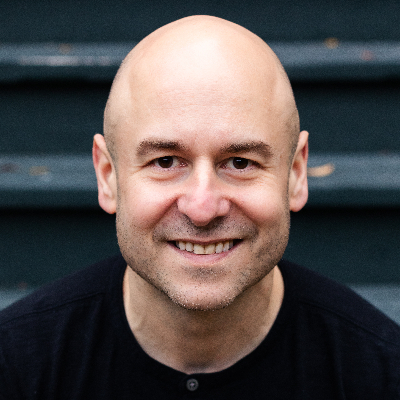
Where I learned it first
When people ask about my background, they’re often surprised by where I begin. Not with engineering, startups, or leadership. I usually start with my mother’s exotic parrot store and the soccer pitch.
Growing up, I spent countless hours around parrots—macaws, cockatoos, amazons, conures—watching people try to connect with creatures that could never be forced into relationship. At the same time, I was learning a different kind of lesson on the soccer pitch, where a collection of talented players didn’t automatically become a team.
I didn’t know it then, but both environments were teaching me the same thing: you can’t force trust, you can’t force belonging, and you can’t force a group of talented people to become a team. You can only create conditions where those things become possible.
It would take me decades to understand what I had learned.
Drifting toward outcomes
For a long time, I forgot.
I earned a degree in computer engineering and built a career as a software engineer, architect, manager, and startup founder. Like many people in technology, I became highly skilled at solving problems, delivering outcomes, and optimizing systems.
The work was meaningful. The challenges were real. I learned a tremendous amount.
But somewhere along the way, I drifted away from something I couldn’t quite name. I could feel it. The farther I moved from the parrot store and the soccer pitch, the farther I moved from a way of being that had once felt natural.
I became increasingly focused on production—outcomes, execution, performance, achievement. There is nothing wrong with those things. That focus on production developed capacities that would later serve me well. But I was becoming disconnected from something deeper.
A hospital room
Years later, I found myself in a hospital during one of the most difficult periods of my life: severe anxiety, severe depression, a marriage that was unraveling, and a story in my head that I might never recover.
I remember sitting there expecting advice. I knew all the advice already. I knew what I was supposed to do. The problem wasn’t knowledge; the problem was that my body couldn’t follow what my mind understood.
Then a nurse approached—slowly, intentionally—and asked if she could sit beside me.
That was all. No diagnosis. No strategy. No attempt to fix me. Just presence.
Something softened. First in my body, then in my mind.
We probably sat together for only a few minutes. It felt much longer. Looking back, I think she gave me one of the most important gifts I’ve ever received: she created a condition. A condition where I could stop fighting. A condition where something new could emerge.
Later that day, another nurse sat beside me and showed me a video about neuroplasticity: The Backwards Brain Bicycle. I don’t remember every detail; I remember the seed it planted. Maybe my brain wasn’t permanently damaged. Maybe the story that I was doomed wasn’t actually true. Maybe change was still possible.
Again, nobody forced a transformation. Nobody convinced me. A condition was created—and within that condition, hope appeared.
Transformation at scale (and the human part)
In the years that followed, I did some of the best professional work of my career. I helped lead a large-scale cultural transformation inside a major enterprise.
On the surface, it was a technology story—Kubernetes, DevOps, infrastructure automation, cloud platforms. But the real challenge wasn’t technical. The real challenge was human.
Experienced engineers were being asked to rethink who they were. The technology mattered; identity mattered more.
What eventually helped wasn’t forcing agreement or demanding compliance. It was finding enough common ground for people to move together.
“We’re all systems engineers.”
That simple framing became a bridge. Not a solution—a condition. A place where transformation could begin.
Practice, belonging, and the mat
Around that same time, another part of my life started calling for attention. Not my mind—my body.
During COVID, I found my way into an Aikido dojo. I didn’t know much about the community. I didn’t have a grand plan. I simply walked into the space and felt something: a sense of belonging before understanding.
I brought my children. We stayed.
Years later, the dojo has become part of our chosen family. We’ve celebrated New Year’s there. We’ve celebrated the Fourth of July there. My children have grown there.
What keeps bringing me back is not technique. It’s practice—the steady cultivation of conditions that allow people to grow.
That path eventually led me to Zen Leadership, then retreats, then teaching, then serving as an instructor. Looking back, I can see that none of these experiences were separate journeys. They were all exploring the same question: what conditions allow human beings to learn, heal, connect, and transform?
The thread that connects it all
Recently, someone scheduled a discovery call with me. I don’t market heavily. I don’t run campaigns. I simply maintain a small presence in the world.
When I asked how he found me, he described a path: a book in a bookstore caught his attention. That led him to Zen. That led him to the Institute for Zen Leadership site. That led him to my profile. That led him to my website.
Then he said something that stopped me: “The energy pulled me in.” Not my credentials. Not my résumé. Not my accomplishments. Something else—something harder to measure and easier to feel.
Looking back, I see the same lesson repeating across my life: in the parrot store, on the soccer pitch, in the hospital, inside enterprise transformations, on the mat, and in coaching conversations.
We spend enormous effort trying to force outcomes—trust, learning, healing, belonging, change. But the most important transformations I have witnessed were never forced. They emerged from conditions that made them possible.
The older I get, the less interested I am in controlling outcomes. The more interested I become in creating conditions—for a team, for a family, for a community, for a conversation, for myself.
Because the things that matter most seem to grow the same way trust grows between a parrot and a person: not through force, but through presence.